My Pizza Box is Smiling at Me…

...and I’m convinced it’s because of the exciting news I have to share!
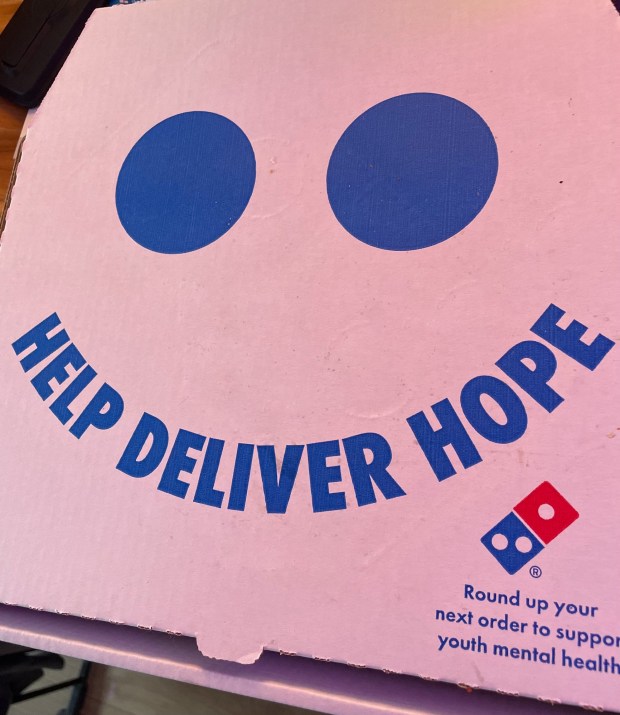
Smiling pizza box courtesy of Domino’s Pizza.

When I moved away from my corporate career and launched Beth on Books, I knew I wanted to help indie authors with editing and book coaching.

Why indie authors in particular?

Simple: the joy.

An indie author’s passion for writing — and for getting your work out there — is unmatched. Obviously, traditionally published authors can love love love writing, too; a crazy, weirdly obsessive love for scribbling stories is a basic condition for putting pen to paper.

But something is lost, I think, when writing turns into contracts and deadlines, expectations and executives to answer to.

As a self-published author, you might be working hard to put food on the table with your books, but you aren’t encumbered by other people’s ideas and restraints. You aren’t toiling away because you’re contractually obligated to, or even, necessarily, because anyone has given you an official stamp of approval.

You write because you love it, and because you believe in your stories and in your characters, and I love that about you.

As a writer myself (and an active Facebook user in several writing support groups), it didn’t take me long to realize that there are a lot of aspiring and self-publishing authors out there who would really love to have the help of a professional editor or book coach, but they can’t afford it right now.

I want to make it clear that I completely support the use of a reputable professional to make sure your work is polished to a gleaming shine before making its way into readers’ hands (or onto their Kindles). Poorly edited books have a way of lowering opinions on self-publishing and ruining indie authors’ careers before they’ve even started. If you have the means, I would always, always encourage authors to find a reputable editor to work with before publishing.

But, that said, I get it.

Good editors charge accordingly — the same goes for book coaches — and not everyone has a few thousand dollars to spend on either one.

So what can I offer to those writers with low budgets and a big passion for writing?


24/7 access to group book coaching and editing tips in a friendly, supportive online group – for less than ten dollars a month.

“Write a Better Book” is my brand-new, exclusive Facebook group where I’ll be offering LIVE group book coaching, editing tips, writing prompts and exercises, free challenges, and more.


Have you joined a group coaching group on Facebook before? I have, for both improving my relationships and meeting my personal fitness goals — and they’re fantastic.

A group coaching environment gives you the opportunity not only to work with me directly, but also to learn from observing the work I do with others in the group. Online group coaching provides exceptional value for a fraction of the cost of traditional, one-on-one coaching, plus you get to connect with an intentional author community made up of your fellow writers. A subscription-based membership to my “Write a Better Book” Program means you won’t have to deal with random bots, scammers, or weirdos from the far-flung corners of the Internet. Every single person in our Facebook group will be there for the right reasons: to learn and support each other.

Join me as I build a supportive community of your fellow writers and share what I’ve learned about books, writing and editing at a fraction of the cost of traditional coaching.

I’m pulling together plans and materials as as we speak, and then I’ll be ready to launch my first intake of members into the group! Until then, here’s a breakdown of what you can expect.

In my exclusive, members-only “Write a Better Book” Facebook group, you’ll get:

  • Two opportunities per week to submit your work for group coaching
  • Access to each live group coaching session in the Facebook group
  • Once-weekly “ask me anything” live sessions where I take writing questions from whoever can tune in
  • Unlimited access to the recorded version of every session after the fact
  • Weekly writing prompts designed to help you improve your current work-in-progress
  • Self-editing tips and challenges

Membership details

  • Month-to-month subscription – cancel anytime
  • Only paying members can join and remain in the Facebook group
  • Cost: $9.99 USD per month, paid via PayPal

Subscribe below to get updates on our launch date and to find out when you can join our first intake! Until then, please spread the word to authors you know and would love to work with in our supportive group.


What is a Pantser? (And Is It Bad To Be One?)

If you’ve ever strolled down a Reddit writing thread or browsed a Facebook indie author’s group (for support, of course, not to procrastinate from *actually* writing – perish the thought!), you’ve probably heard the term “pantser.” It’s a funny-sounding word; here it is used in a sentence:

“I’m a pantser, and it works for me!”

Or “I could never outline – I’m a pantser!”

But what is a pantser, exactly? And is it bad to be one?

You can, actually – and you do, if you’re a pantser.

A pantser is someone who “flies by the seat of their pants” when they’re crafting a story. (If English is your second language, “fly by the seat of your pants” is an expression that means “decide what to do as a situation progresses”, as in with no pre-planning or even a clear strategy.)

For writers, this means sitting down to a blank page and a blinking cursor with no outline, no chapter-by-chapter plan, and no index cards detailing what should happen in each scene (Danielle Steel’s method, I’m told).

That’s right. Nuthin’.

For those who love to plan, that probably sounds like a nightmare.

The chaos! The insanity!

But for others, there’s simply no other way to write.

The Pantsing Process

For a pantser, writing goes something like this:

I have a great idea!

*sits down at computer*

*writes*

That’s the gist of it. Further down the road, pantsers can find themselves in situations like this:

Okay, Miss Main Character, I didn’t know you felt that way about him!

Oooh, that’s interesting! I guess my characters aren’t going camping this weekend after all…

I love this story!

Wait… what should happen next?

And, once the editing process has begun:

Yes, it’s a thriller, but it sort of turned into a romance, too…

Plot holes? Where?

Rewrite it?!

The pros and cons of pantsing are like two sides of the same coin.

On one side, when you sit down to write with few pre-planned ideas, you get to tap into your inspiration and let your ideas flow freely, possibly ending up with a more exciting, unexpected and interesting story than you would have otherwise.

On the other, you might get stuck in parts, unsure of what should happen next. Or, after you finish the book, you’ll discover gaping plot holes because either your characters veered off course at some point or your ideas changed, and you forgot about something you had set up at the beginning. You might also receive reader feedback that the story doesn’t quite hit the mark for your genre.

How the other half lives

Planners, by contrast, work out the direction of their story before they begin to write. Some planners plot out the details of every scene, thereby swerving the issues of plot holes and wondering what to write next. Others like to set down a basic outline and stick to it.

When it comes to writing for a specific genre, like thrillers or romance, planning your book to some extent can help you make sure the story covers all the bases that readers will expect – for example, meeting the love interest at the start instead of running into them halfway through (because you suddenly, at that exact moment in the story, made them up).

Where planners can run into trouble is in the time and detailed thinking it takes to plot everything out. This may become so dreary and overwhelming that they give up. Planning everything to a T also leaves little room for bursts of creativity that might make the story better.

What about pants-planning?

If you couldn’t tell, I just now invented the word “pants-planning” – it literally rolled off my fingertips as I was typing that heading. Yes, dear reader, this author is a pantser herself. As such, I’m uniquely qualified to invent a word like “pants-planning” and present it to my fellow pantsers as a way to write the way that best works for you – while keeping yourself out of trouble.

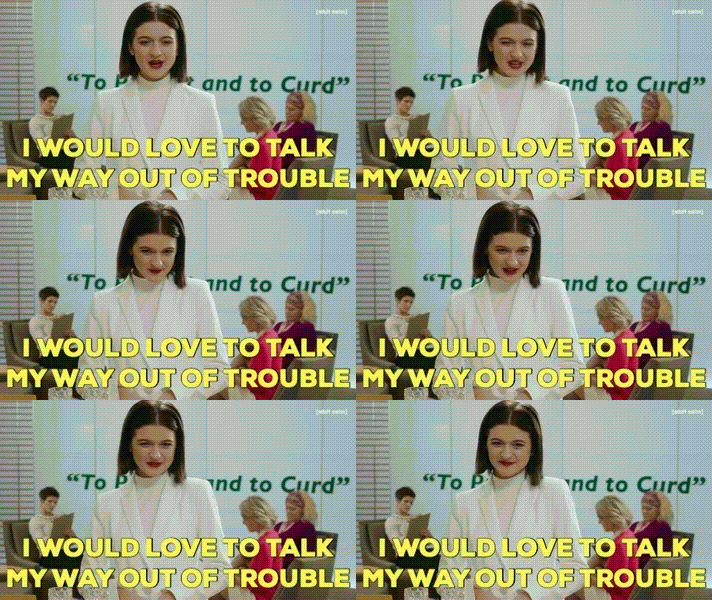
Sadly, there’s no talking your way out of trouble with a developmental editor. There are only edits. Many, many edits.

Pants-planning is essentially adding a few lil’ planning sessions here and there during the writing process.

For example:

You might think about a basic direction for the story before you start.

You might start writing all willy-nilly, then stop when you run out of steam to figure out the next few plot points.

You might start writing all willy-nilly, then stop and go over what you’ve written to make sure it’s hitting all the plot points (or “beats”) expected of your genre.

You might decide on an amazing ending for the story, then pause your writing every once in a while to make sure the plot is unfolding in that direction.

Pants-planning is like run-walking: you run a bit, then you walk a bit, and then you run again.

As a writer with ADHD, I find that I lose interest in writing my story when I try to plot out too much of it. (No more novelty or challenge, you see.) BUT I also often end up stuck in the Pit of Plot Confusion (aka “what should happen next?!”) when I don’t pause along the way to give the story structure some thought.

Ultimately, no matter whether you’re a pantser or a planner, your preferred style probably isn’t a choice, per se. Rather, it’s how you naturally work.

So if you’re a pantser at heart, there’s no need to feel inferior or disorganized. And you don’t need to buy a planner or pick up a pack of index cards to write a successful book.

But I do recommend trying your hand at pants-planning to set yourself up for success – and to save a whole lotta rewriting later.

What is a book coach, anyway?

I remember the first time I heard the term ‘book coach.’ It was on Instagram, and my first thought was Wow, I want to do that! As a career writer and editor, I should have been used to working alone on long manuscripts, and I am. But I also love speaking with my clients, working through issues together, and giving them ideas and strategies for improving their writing. That, in a nutshell, is book coaching.

A book coach teaches, but isn’t strictly a teacher.

The job of any coach is three-fold: to inspire, to support, and to teach. A book coach is no different — my job as a coach is to support you in your writing career, inspire you by sharing my perspective and experience, and teach you ways to improve your writing.

Book coaching is ideal for writers who are actively working to improve their writing or who would like a guiding voice as they make progress with a story. The process is more involved and direct than traditional editing — and perfect for authors who want guidance to work on their own craft. Unlike the editing process, where I work on your manuscript in my own space and come back to you with comments and feedback, book coaching is something you and I do together in our video or audio sessions —- we talk about your work, problem-solve in real time, and leave you with fresh excitement and motivation about moving your work forward.